Catastrophic injuries such as spinal cord injuries, traumatic brain injuries, and amputations can significantly affect a person’s ability to perform daily activities, often requiring ongoing medical care, adaptive devices, and specialized equipment.
Durable Medical Equipment (DME) plays an essential role in supporting mobility, independence, and long-term health. For professionals involved in medical case management, life care planning, and medico-legal services, understanding how to properly evaluate and recommend DME is critical for addressing patient needs and documenting future care requirements.
This article is based on insights from the webinar “Best Practices for DME Use in Catastrophic Injuries,” presented by Cynthia Bourbeau, RN, CRRN, CCM, CNLCP®, CHLCT, and Cindy Fleury, RN, CCM, CNLCP®, who discuss how thoughtful equipment selection supports recovery and comprehensive life care planning.
Understanding Catastrophic Injuries and Their Impact
Catastrophic injuries often affect multiple body systems and may permanently alter a person’s physical abilities.
Common catastrophic injuries include:
- spinal cord injuries
- traumatic brain injuries
- amputations
- severe burns
- hypoxic brain injuries
These injuries frequently lead to functional limitations that require long-term support through adaptive equipment and assistive technologies.
One example is spinal cord injury, which occurs when damage to the spinal cord disrupts communication between the brain and the rest of the body. This disruption can lead to loss of movement, sensation, or both below the level of injury.
The severity and location of the injury determine how much function remains.
Quadriplegia and Functional Limitations
Quadriplegia, also known as tetraplegia, is paralysis affecting both arms and both legs.
Depending on the level and severity of the injury, individuals with quadriplegia may experience:
- limited or absent limb movement
- loss of hand function
- impaired breathing
- reduced sensation below the injury level
Because every patient’s injury is unique, equipment recommendations must be tailored to the individual’s specific functional abilities.
Life care planners and case managers must carefully assess what the patient can and cannot do independently before recommending equipment.
Common Complications Associated With Spinal Cord Injury
Individuals with spinal cord injuries face a range of medical complications that must be addressed through appropriate care planning and equipment.
| Complication | Description |
| Autonomic dysreflexia | Dangerous increase in blood pressure triggered by stimuli below the injury level |
| Pressure ulcers | Skin breakdown caused by prolonged pressure |
| Blood clots | Increased risk due to immobility |
| Respiratory complications | Weak respiratory muscles affecting breathing |
| Neurogenic bowel and bladder | Loss of bladder and bowel control |
Many of these complications can be prevented or managed with appropriate medical supplies and adaptive equipment.
Examples include specialized mattresses, wheelchair cushions, catheter supplies, and respiratory support equipment.
Respiratory Equipment for Spinal Cord Injuries
Higher spinal cord injuries can impair respiratory muscle control, which may affect breathing and secretion clearance.
Respiratory-related equipment may include:
- ventilators
- suction machines
- cough assist devices
- oxygen supplies
- oscillating chest compression vests
These devices help maintain airway clearance and support respiratory function, reducing the risk of pneumonia and other complications.
Monitoring equipment such as pulse oximeters, blood pressure cuffs, and thermometers may also be necessary to detect early signs of complications.
Feeding and Nutritional Support
Some patients with severe spinal cord injuries experience dysphagia, or difficulty swallowing.
In these cases, feeding tubes such as gastrostomy tubes may be required.
Common equipment for enteral feeding includes:
| Equipment | Purpose |
| Feeding pumps | Deliver nutrition at a controlled rate |
| Feeding bags and tubing | Transport nutritional formula |
| Syringes | Administer medications or flush tubes |
| IV poles | Hold feeding pumps and bags |
Some patients with severe spinal cord These supplies allow caregivers to safely administer nutrition and medications.
Assistive Technology for Feeding
Maintaining independence during meals can be important for quality of life.
Adaptive devices may include:
- modified utensils with larger handles
- adaptive plates and bowls
- wrist straps to hold utensils
- robotic feeding devices
One example is robotic feeding technology that allows individuals to control the feeding process using switches activated by hand, head, or breath.
These devices can reduce caregiver burden and allow patients greater autonomy during mealtimes.
Mobility Equipment for Catastrophic Injuries
Mobility is one of the most significant challenges following catastrophic injuries.
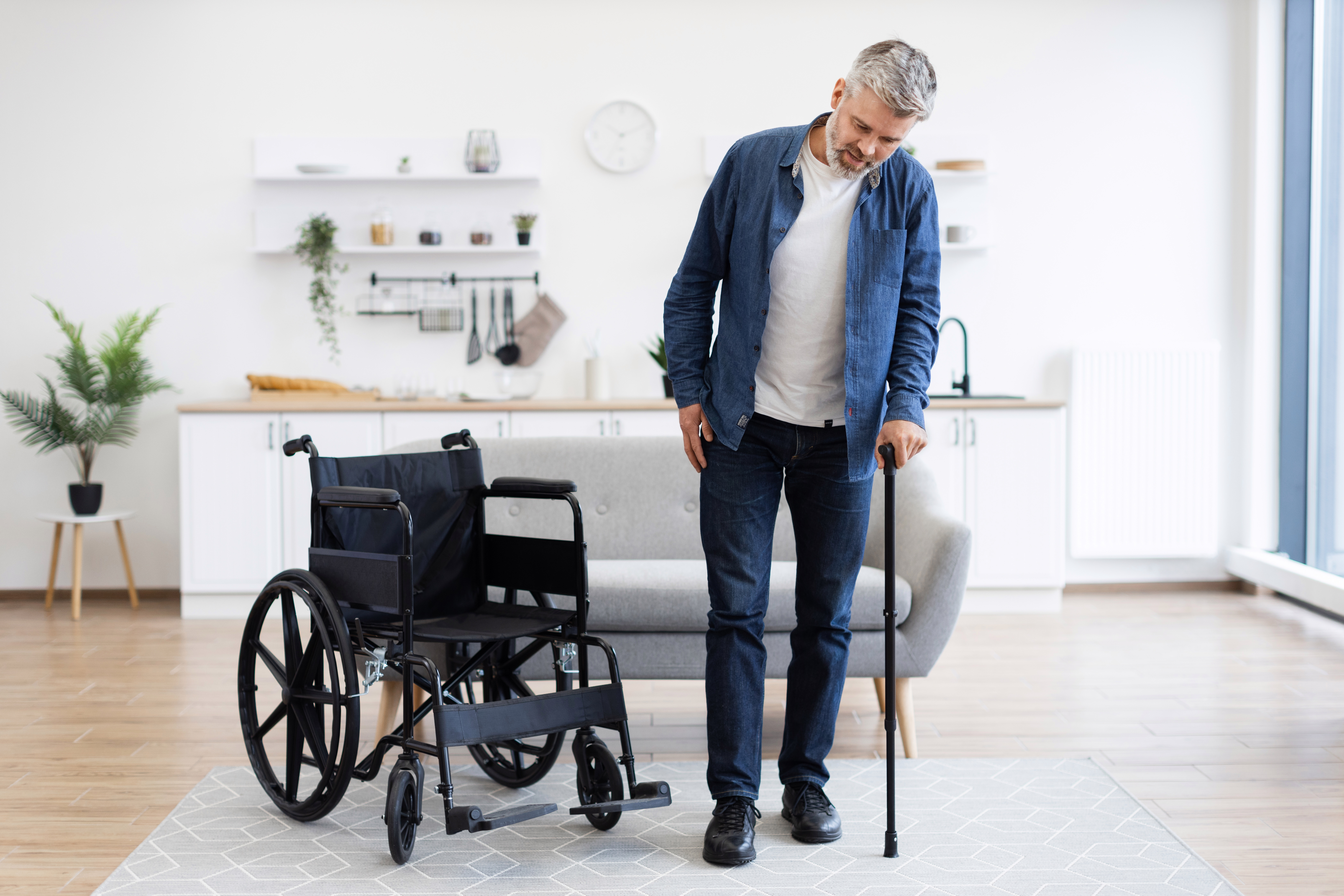
For individuals with quadriplegia, motorized wheelchairs are often essential for independent mobility.
Features may include:
- joystick controls
- sip-and-puff controls
- head-controlled steering
- standing capabilities
Standing wheelchairs allow individuals to raise themselves into a standing position, which can provide several health benefits.
Benefits of Standing Wheelchairs
| Benefit | Impact |
| Improved circulation | Helps prevent blood clots |
| Bone health | Encourages weight-bearing |
| Respiratory support | Enhances lung function |
| Social interaction | Allows face-to-face communication |
Manual wheelchairs are often recommended as backup devices in case of mechanical failure or battery issues with motorized chairs.
Transfer Equipment and Lifts
Transferring from bed to wheelchair or chair to bathroom can pose safety risks for both patients and caregivers.
Mechanical lift systems such as Hoyer lifts are commonly used.
Two common types include:
- portable floor lifts
- ceiling-mounted lift systems
Ceiling lifts are often recommended for home environments because they reduce caregiver strain and provide safer transfers.
Portable lifts may also be useful for community settings or emergencies.
Environmental Controls and Smart Technology
Modern smart technology has significantly improved independence for individuals with severe disabilities.
Voice-activated systems allow patients to control many aspects of their environment.
Examples include:
- turning lights on and off
- adjusting thermostats
- controlling televisions
- answering phone calls
Devices such as smart speakers and voice assistants enable individuals with limited mobility to interact with their environment independently.
Backup generators may also be necessary to ensure continued operation of essential equipment during power outages.
Transportation Considerations
Transportation is another key consideration in long-term care planning.
Vehicle modifications may be required depending on the patient’s level of mobility.
Common modifications include:
| Modification | Purpose |
| wheelchair lifts | allow entry into vehicles |
| ramps | provide wheelchair access |
| hand controls | enable driving without foot pedals |
| transfer seats | assist with entering the driver seat |
Replacement timelines typically range from 10 to 15 years, depending on vehicle usage and maintenance.
Driving evaluations are often recommended before modifying a vehicle to ensure the patient can safely operate it.
Durable Medical Equipment for Paraplegia
Paraplegia involves paralysis of the lower body while the arms remain functional.
Because upper body function is preserved, many individuals with paraplegia maintain high levels of independence.
Mobility equipment may include:
- lightweight manual wheelchairs
- power-assist wheels
- mobility scooters
- standing frames
These devices help patients maintain independence while minimizing strain on the upper extremities.
As patients age, motorized mobility devices may become necessary to reduce shoulder injuries caused by repetitive wheelchair propulsion.
Home Independence and Instrumental Activities of Daily Living
Assistive devices can help individuals maintain independence at home.
Examples include:
- reachers and grabbers
- adjustable mops and brooms
- anti-slip kitchen mats
- wheelchair baskets
- adaptive exercise equipment
These tools allow individuals with disabilities to perform routine tasks such as cleaning, cooking, and household maintenance.
Maintaining independence in daily activities can significantly improve quality of life.
Durable Medical Equipment for Amputations
Amputations may occur due to traumatic injuries, infections, or chronic conditions such as vascular disease.
The loss of a limb can significantly affect a person’s ability to perform everyday tasks.
Assistive devices for upper-extremity amputations may include:
- adaptive clothing with Velcro closures
- automatic dispensers for hygiene products
- one-handed kitchen tools
- adaptive writing devices
These devices help individuals complete activities of daily living using one hand.
Adaptive Kitchen Equipment for Upper-Limb Amputations
Kitchen tasks can be particularly challenging after upper-limb amputation.
Several devices are designed specifically for one-handed use.
Examples include:
| Device | Purpose |
| one-handed cutting boards | secure food while cutting |
| automatic jar openers | open containers independently |
| suction brushes | wash dishes with one hand |
| silicone pads | stabilize bowls during mixing |
These tools allow individuals to safely prepare meals and maintain independence.
Prosthetics and Skin Care Considerations
Prosthetic limbs can restore mobility and functionality for individuals with amputations.
However, prosthetic use can also lead to complications such as skin irritation and pressure ulcers.
Proper care and monitoring are essential.
Potential interventions include:
- specialized antiperspirants for prosthetic use
- wound care supplies
- dressing materials
- wound vacuum therapy
Patients with chronic wounds may require ongoing wound clinic visits.
Mobility Support for Lower-Extremity Amputations
Individuals with lower-extremity amputations may rely on prosthetics, mobility devices, or both.
Mobility equipment may include:
- manual wheelchairs
- scooters
- walkers or canes
- knee scooters
As with other catastrophic injuries, replacement schedules and maintenance costs should be considered when developing long-term care plans.
Preventing Falls and Secondary Injuries
Falls are a significant concern for individuals with mobility impairments.
Assistive technologies such as fall detection devices and medical alert systems can provide additional safety.
For example, wearable devices may automatically contact emergency services if a fall occurs.
These technologies can provide peace of mind for both patients and caregivers.
Final Considerations on Durable Medical Equipment in Catastrophic Injury Cases
Durable medical equipment plays a vital role in supporting individuals living with catastrophic injuries, helping improve mobility, safety, and long-term independence. Because every injury presents unique functional challenges, equipment recommendations must be carefully evaluated and tailored to each individual’s medical condition, environment, and daily living needs.
In complex injury and litigation contexts, these decisions often require detailed clinical analysis and documentation. Medico-legal services help ensure that equipment recommendations are supported by objective medical evidence, functional assessments, and long-term care considerations. Through comprehensive evaluations, life care planning, and expert analysis, MLCC helps legal professionals and stakeholders understand the medical necessity, future costs, and functional impact of durable medical equipment in catastrophic injury cases.